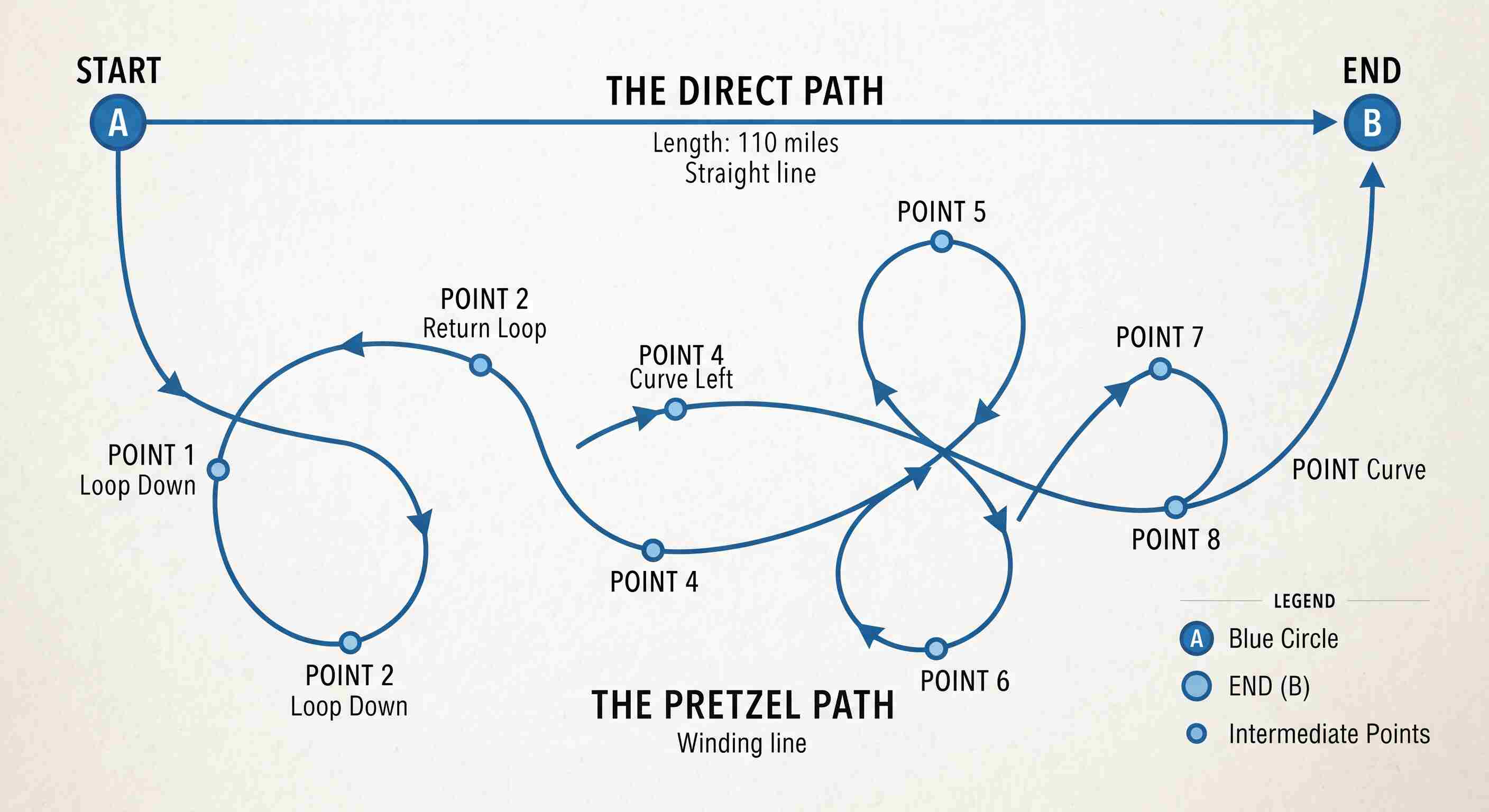
Avoiding conflict is not necessarily a meaningful alternative to confronting a problem. Often, it just delays the same outcome.
Suppose a colleague repeatedly misses deadlines.
You could:
-
Address it directly now:
“We need to figure out why these deadlines are being missed.”
-
Avoid the conversation, hoping it resolves itself.
If the missed deadlines continue, you eventually have to address the problem anyway. In that case, option 2 wasn't really a different decision about the underlying issue. It was the same necessary decision, made later and after additional consequences had accumulated.
Choosing not to address something primarily because it might feel uncomfortable, tense, risky, or unpleasant is the common move.
The immediate temptation is often to make the discomfort go away rather than solve the underlying problem.
For example:
- not telling someone their behaviour is bothering you
- not asking for something you need
- not challenging an unfair decision
- not ending a relationship that isn't working
- not making a decision because it might disappoint someone
Sometimes not confronting something is itself a deliberate and substantively different choice—for example, deciding that an issue isn't important enough to spend relational or emotional capital on, or deliberately giving someone time to resolve it independently.
In too many cases, however, various forms of cowardice is rationalized as being wise.
someone hostile and therefore u—not because avoidance actually produces a better result.